






Spotlights
Talk Show Executive Producer, Showrunner, Talk Show Production Coordinator, Broadcast Producer, Television Producer, Talk Show Segment Producer, Production Manager, Talk Show Content Producer, Talk Show Development Producer, Associate Producer
When you tune into your favorite talk show, the engaging conversations, timely topics, and seamless flow of the program all come together thanks to the vision and coordination of a Talk Show Producer. These professionals shape the content that millions watch, making sure every episode informs, entertains, and connects with its audience.
Talk Show Producers oversee the entire production of a talk show, from brainstorming episode themes to coordinating with hosts, guests, and production teams. They plan segments, manage schedules, guide scriptwriting, and ensure that every detail—technical and creative—supports a cohesive and compelling final product.
Using a blend of organizational skills, creative insight, and collaboration tools, Talk Show Producers work with teams that include writers, researchers, camera operators, and editors. Their leadership ensures that each episode runs smoothly and resonates with viewers, keeping the show fresh and relevant in a fast-paced media landscape.
- Seeing a live show come together flawlessly, knowing your planning made it happen.
- Bringing important conversations and diverse voices to a wide audience.
- Collaborating creatively with hosts, writers, and guests to craft memorable episodes.
- Managing both creative and logistical challenges to deliver high-quality television.
Working Schedule
Talk Show Producers often work long, irregular hours that revolve around the show's taping and production schedule. This can include early mornings, late nights, and weekends, especially as taping days and live broadcasts approach. Many work in fast-paced studio environments or production offices, and freelancing or contract work is common in this field, depending on the show's structure and network.
Typical Duties
- Develop show concepts, themes, and episode formats that engage the target audience.
- Collaborate closely with the talk show host to plan segments, interviews, and guest appearances.
- Research topics, guests, and current events to ensure informed and relevant content.
- Schedule, brief, and manage logistics for guests, including travel and accommodations.
- Manage the production budget, allocating resources efficiently and tracking expenses.
- Hire and oversee writers, researchers, technical crew, and other production staff.
- Guide the scripting process to maintain clarity, flow, and audience appeal.
- Coordinate pre-production activities such as location scouting, set design, and props.
- Maintain the production timeline, ensuring deadlines are met for taping and post-production.
- Work with directors and technical teams to achieve desired visual and audio quality.
- Troubleshoot issues during rehearsals and tapings to keep production on track.
- Review and approve final edits before episodes air.
Additional Responsibilities
- Attend production meetings and collaborate on creative decisions.
- Negotiate contracts with guests and vendors.
- Monitor audience feedback and ratings to inform future episodes.
- Ensure compliance with broadcasting standards and regulations.
- Manage crisis situations or unexpected changes during production.
- Stay updated on industry trends and competitor programming.
- Support marketing and promotional activities for the show.
A Talk Show Producer's day often starts by reviewing the upcoming episode's schedule, confirming guest arrivals, and checking in with writers and researchers to finalize content. They may attend a morning production meeting to align the team on goals and any last-minute changes.
Midday is typically focused on coordinating rehearsals or tapings, working closely with the host and director to ensure smooth segment flow. They handle guest coordination, solve problems as they arise, and keep an eye on the production timeline to avoid delays.
In the afternoon or evening, they oversee post-production reviews, collaborate with editors to approve final cuts, and plan for future episodes. They might also engage with marketing teams or analyze audience feedback to keep the show aligned with viewer interests.
Soft Skills
- Excellent communication to work with diverse teams and guests.
- Strong organizational skills to manage complex schedules and logistics.
- Creative thinking to develop fresh and engaging content ideas.
- Adaptability to handle last-minute changes and high-pressure situations.
- Leadership to inspire and coordinate production staff.
- Attention to detail to maintain high-quality standards.
- Problem-solving to address unexpected issues quickly.
- Interpersonal skills for negotiating and collaborating effectively.
- Time management to meet tight deadlines.
- Ability to multitask across various production elements.
- Patience and calm under pressure during live tapings.
- Critical listening to ensure content relevance and flow.
Technical Skills
- Understanding of television production workflows.
- Familiarity with scriptwriting and editing software.
- Knowledge of budgeting and resource allocation tools.
- Competence with scheduling and project management software.
- Basic understanding of audio and video equipment.
- Ability to coordinate live broadcast technical aspects.
- Research skills using digital and traditional sources.
- Proficiency in communication platforms for team coordination.
- Knowledge of legal and compliance standards in broadcasting.
- Experience with social media and audience analytics tools.
- Executive Producer: Oversees overall show vision and high-level decisions.
- Segment Producer: Focuses on producing specific segments within episodes.
- Associate Producer: Assists with research, coordination, and administrative tasks.
- Development Producer: Works on creating new show concepts and pilot episodes.
- Content Producer: Shapes the editorial direction and storylines.
- Production Coordinator: Manages day-to-day logistics and scheduling.
- Digital Producer: Handles online content and social media extensions of the show.
- Field Producer: Manages remote shoots and location-based segments.
- Television networks and broadcast stations.
- Cable and satellite TV channels.
- Streaming platforms producing talk shows.
- Independent production companies.
- Public broadcasting organizations.
- Radio stations with talk show segments.
- Digital media companies with video content.
- Event production firms for live shows.
- Talent agencies coordinating guest appearances.
- Advertising agencies producing sponsored content.
- Marketing firms involved in show promotions.
- Educational media organizations producing interview series.
Talk Show Producers face significant pressure to deliver engaging content on tight deadlines that often shift rapidly due to guest availability or breaking news. The need to balance creativity with logistics can be mentally demanding.
Work hours are frequently irregular and long, including evenings and weekends to accommodate tapings, live broadcasts, and post-production. Producers must be flexible and ready to manage last-minute changes.
This career demands strong multitasking and problem-solving abilities to juggle many moving parts simultaneously. Producers often sacrifice personal time and must maintain calm and leadership under stress to keep the show on track.
- Growth of streaming platforms offering new talk show formats and distribution channels.
- Increased integration of social media to engage audiences and gather real-time feedback.
- Use of data analytics to tailor content to viewer preferences and trends.
- Remote guest interviews and virtual production becoming more common.
- Greater emphasis on diversity and inclusion in guest selection and topics.
- Adoption of advanced video and audio technologies for higher production quality.
- Cross-platform content strategies blending TV, online, and social media.
- Shorter, snackable segment formats for digital audiences.
- Incorporation of interactive elements such as live polling or viewer input.
- Shift toward more topical and socially relevant programming to attract younger viewers.
Many future Talk Show Producers enjoy storytelling, whether through writing, acting, or organizing school events. They often show early interest in media, communication, and current events, eager to explore how stories are shared with others.
They may have participated in debate clubs, drama teams, or student news production, developing skills in planning, public speaking, and teamwork that hint at their future career path.
Becoming a Talk Show Producer typically involves earning a bachelor's degree in fields like communications, media studies, journalism, or film and television production. Hands-on experience through internships and student media is vital to building skills and industry contacts.
Students can take courses in relevant subjects such as:
- Broadcast Journalism
- Media Production and Editing
- Television and Film Writing
- Communication Theory
- Public Speaking and Presentation
- Digital Media and Social Media Strategies
- Project Management
- Media Law and Ethics
- Research Methods
- Audio and Video Technology
In addition to formal education, aspiring producers benefit greatly from internships at TV stations or production companies to understand real-world workflows. Building a strong portfolio of projects and gaining experience in various production roles can open doors for entry-level positions and career advancement.
- Join your high school’s media or broadcasting club to get early exposure to production work.
- Take classes in English, communications, and technology to strengthen writing and technical skills.
- Volunteer for school announcements or local community TV projects.
- Pursue internships or summer programs at local TV stations or media companies.
- Develop strong research and organizational habits through class projects.
- Attend workshops or seminars on media production and storytelling.
- Build a portfolio by creating your own podcasts, video blogs, or school shows.
- Network with professionals through online platforms and local media events.
- Practice public speaking and interview skills in debate or drama clubs.
- Consider enrolling in college courses or dual-credit classes related to media production.
- Look for programs with hands-on experiences like student-run TV stations or internships.
- Choose schools with strong connections to local media and production companies.
- Ensure the curriculum includes courses in media law, ethics, and digital technologies.
- Seek programs offering training in project management and leadership skills.
- Consider schools that provide opportunities to collaborate on real productions.
- Check for faculty with industry experience who can mentor students.
- Prioritize programs that teach both creative and technical aspects of production.
- Look for access to current production equipment and editing software.
- Find programs that support portfolio development and career services.
- Consider schools offering workshops or guest lectures from industry professionals.
- Seek opportunities for cross-disciplinary learning in journalism, marketing, and digital media.
- Evaluate the program’s alumni network and job placement rates.
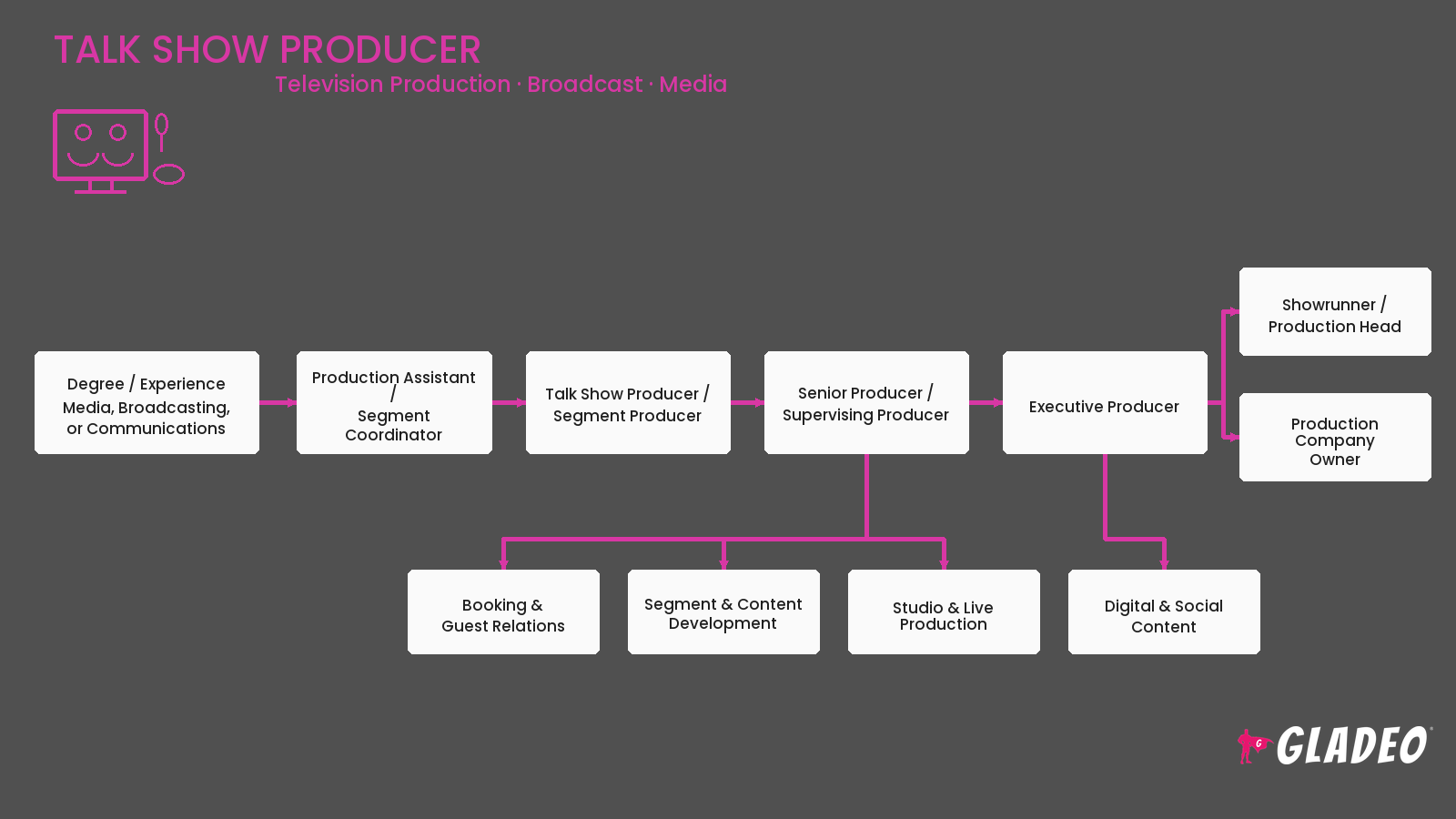
- Apply for internships or assistant producer roles at local TV stations or production companies.
- Create a reel or portfolio showcasing any media projects or school productions.
- Network with media professionals through events, social media, or career fairs.
- Volunteer to assist with live events or community media productions to gain experience.
- Develop skills in scheduling, research, and scriptwriting through freelance or school projects.
- Learn basic editing and production software to increase your value.
- Prepare for interviews by practicing communication and problem-solving scenarios.
- Seek mentorship from experienced producers or media professionals.
- Stay informed about current events and popular culture to contribute ideas.
- Demonstrate reliability and a positive attitude to build a strong reputation.
- Take entry-level roles like production assistant to understand the production environment.
- Be willing to work irregular hours and manage multiple tasks simultaneously.
- Master project management and leadership to take on larger production responsibilities.
- Build strong relationships with hosts, talent, and network executives.
- Develop expertise in budgeting and resource allocation for bigger shows.
- Expand your creative skills by contributing original concepts and formats.
- Gain experience in multiple production roles to understand the full workflow.
- Stay current with industry trends and technology to remain competitive.
- Pursue advanced roles such as Executive Producer or Showrunner.
- Consider specializing in digital or new media production to broaden opportunities.
Websites:
- Producers Guild of America (PGA) - https://www.producersguild.org
- National Association of Television Program Executives (NATPE) - https://www.natpe.com
- Broadcast Education Association (BEA) - https://www.beaweb.org
- Television Academy - https://www.emmys.com
- Deadline - https://deadline.com
- Variety - https://variety.com
- Hollywood Reporter - https://www.hollywoodreporter.com
- Media Bistro - https://www.mediabistro.com
- LinkedIn Learning - https://www.linkedin.com/learning
- Mediabistro Career Center - https://www.mediabistro.com/jobs
- Broadcasting & Cable - https://www.nexttv.com
- American Film Institute (AFI) Conservatory - https://conservatory.afi.com
- Poynter Institute - https://www.poynter.org
- New York Film Academy - https://www.nyfa.edu
Books:
- The Producer's Business Handbook by John J. Lee Jr. and Anne Marie Gillen
- Television Production Handbook by Herbert Zettl
- The Art of Producing Television and Radio by Howard J. Blumenthal and Oliver R. Goodenough
- Producing for TV and New Media by Cathrine Kellison and Mary Lou Belli
- Live TV: A Producer’s Guide by Ava Holt
If producing talk shows doesn't fit your path, many related careers offer exciting ways to work in media, storytelling, and production, leveraging similar skills and interests.
- Television Director
- Casting Director
- Broadcast Journalist
- Scriptwriter
- Talent Agent
- Event Producer
- Public Relations Specialist
- Media Planner
- Digital Content Producer
- Social Media Manager
Newsfeed

Featured Jobs
Online Courses and Tools